
Prefer to listen? Press play
In the morning of 25 June 1932, in front of 25,000 spectators at Lord’s Cricket Ground, a 6 ft 3-inch Indian bowler was measuring his run-up. He was Mohammad Nissar, preparing to bowl the first ball in test cricket for India. Facing him was the world’s best opening batsman of that time, Herbert Sutcliffe. Sutcliff’s career batting average at 60.73 to date is the highest by any English batsman and the fifth‐highest worldwide. At the non-striker’s end stood Percy Holmes, who, along with Sutcliffe, held the then world record of the highest opening partnership of 555 runs in first-class cricket.
This was not all; the debutante Indian team had to handle the likes of Wally Hammond, widely regarded as one of the greatest batsmen to play the game; Douglas Jardine, the notorious mastermind of the bodyline bowling; and Frank Wolley, with a first-class cricket career of over 50,000 runs. The English team also had in its ranks Les Ames, regarded as one of the finest wicketkeeper-batsmen in cricket history, along with Bill Bowes and Bill Voce, formidable and feared fast-medium bowlers of the era. To even the most patriotic Indian supporter sitting in the stadium filled with 25000 spectators, the contest seemed a bit unfair. While the Indian team may have lost the match, it acquitted itself with honor, giving the experienced English side some very scary moments. It was not a washout; it was a match between equals and an announcement that Indian cricket had arrived on the world stage.
The Runup to the First Test Match Took 200 Years
1721–1792: British sailors played India’s first recorded cricket match in Cambay (present-day Khambat town in Anand district of Gujarat in 1721), followed by the founding of India’s first and the world’s second-oldest cricket club, the Calcutta Cricket Club, in 1792.
1846–1886: The Parsis pioneered Indian cricket, founding the Oriental Cricket Club, in 1846. In 1886, the community organised and self-funded India’s first overseas tour to England, playing 28 matches and winning one. The team was captained by Dr. Dhunjishaw Hirjibhai Patel, a Grant Medical College alumnus and one of the rare players in the annals of the game to balance elite cricket with a demanding medical practice. While the Parsi community pioneered cricket in India, their participation kept declining over the years. Farokh Engineer was the last Indian Parsi player to play for the country in 1975.
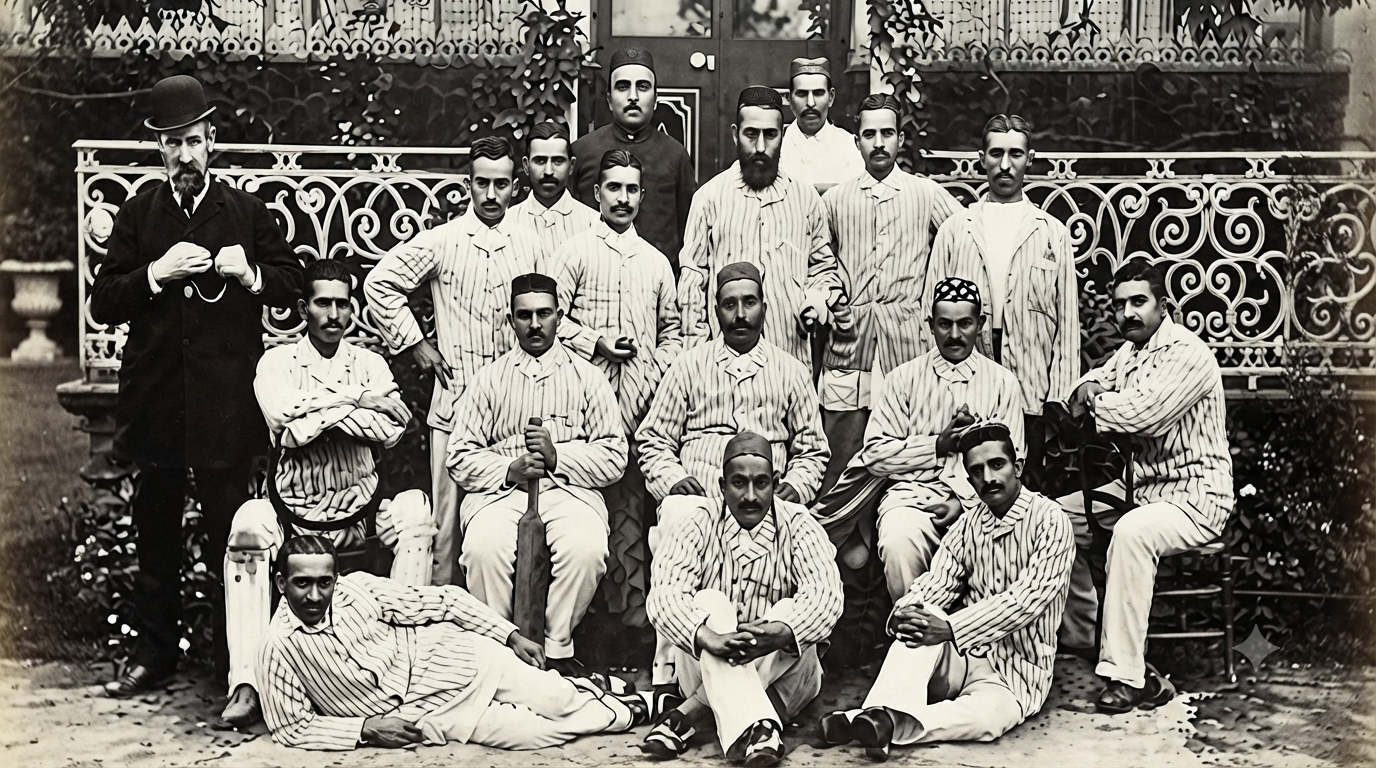
The first Indian team to visit overseas (1886)
1888: The second Indian cricket team to visit overseas was again the Parsi Cricket Club team in the year 1888, led by Pestonji D. Kanga, to England. This team acquitted itself much better—31 matches, 11 losses, 12 draws, and 8 wins. The legendary English cricketer W.G. Grace commented, “In one thing they showed excellent promise: their consistent effort in playing an uphill match.”
1911: It took 23 years (1911) before an Indian team of truly national character would go on an overseas tour. In a true sense, the 1911 team was the first national Indian cricket team in terms of composition. The team was captained by Maharaja of Patiala, not primarily because of his cricketing credentials but more for his royal lineage. The 1911 team did not do very well—it played 14 first-class matches, won 2, drew 2, and lost 10.
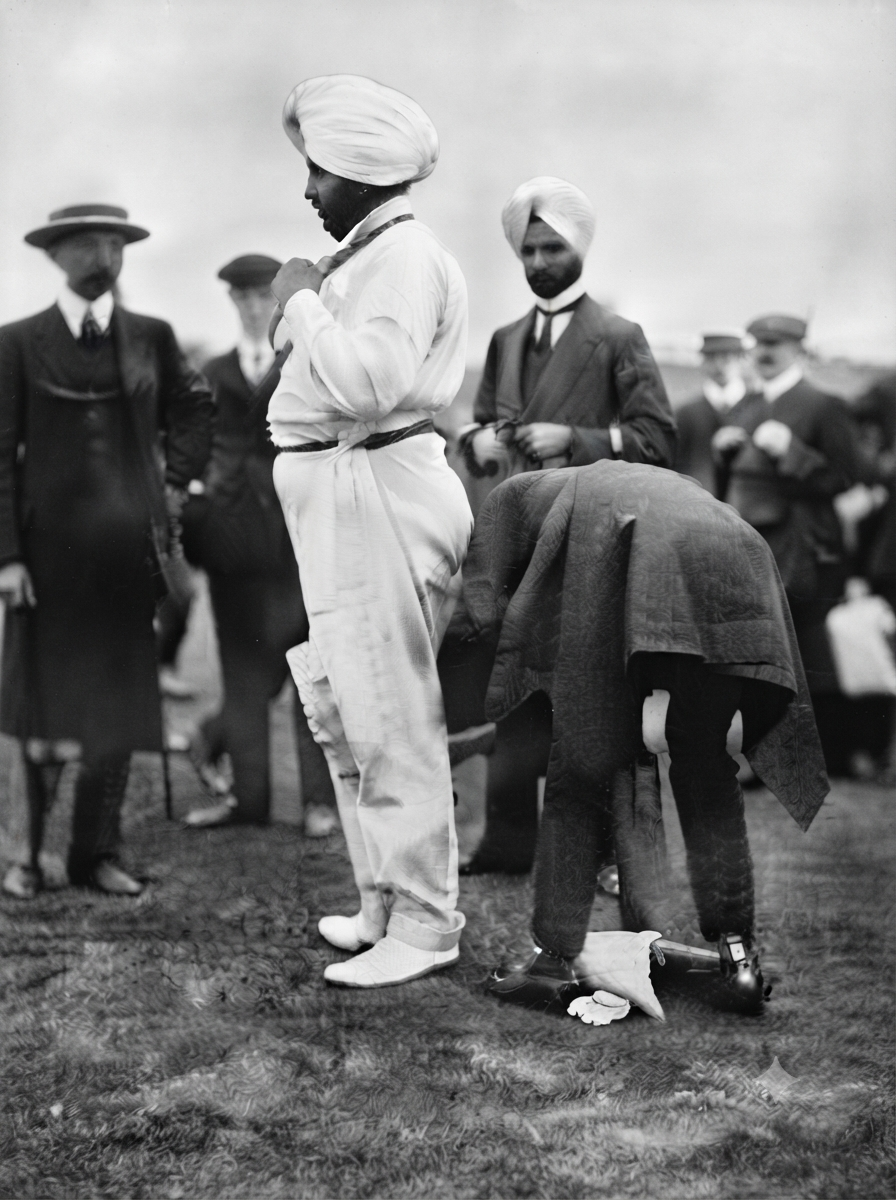
His Highness Bhupinder Singh (the captain), the Maharaja of Patiala, pads up. A colorful personality, he gave the world the Patiala peg. He was also probably the only cricketer in the history of the game to have a retinue of attendants exclusively to adjust his cricket gear when he went out to bat. Despite his extravagance, to his credit, the Maharaja made immense contributions to Indian cricket- founding of the BCCI, donated the Ranji trophy, funding the construction of the Brabourne and the Chail cricket stadiums, engaging former English test players (Wilfred Rhodes and Harold Larwood) to coach the Patiala cricket team, and was the principal funder of the 1932 Indian test cricket team to play first official test match in England and the 1935-36 tour to Australia.
The social impact of the 1911 tour to England: While the result is imminently forgettable, the team made a statement that is worth remembering and celebrating. The 1911 All-India cricket team that toured England was intentionally structured along religious and communal lines to ensure representation across the subcontinent’s primary communities—1 Sikh, 6 Parsis, 5 Hindus, and 3 Muslims. Also in this team were two brothers, Baloo Palwankar and Shivram Palwankar, untouchables by caste. The presence of players from the untouchable caste in a team with a majority of upper-caste Hindu members and captained by a royal was revolutionary for early twentieth-century India. The credit for this goes to Head of the Selection Committee, Colonel J.G. “Jungly” Greig, an influential British army officer born in India who had a major hand in mentoring Palwankar Baloo early in his career. Credit must also go to Maharaja of Pariala, Faramjee Patel and the Tata brothers—Sir Dorabji Tata and Ratanji Tata. Baloo Palwankar acquitted himself well, this slow left‐arm spinner took 75 wickets during the tour with an average of 20.12 with a best analysis of 8‐103. Baloo was felicitated on his return home, and one of the organizers of the event was a young man named BR Ambedkar who later went on to draft the constitution of independent India.
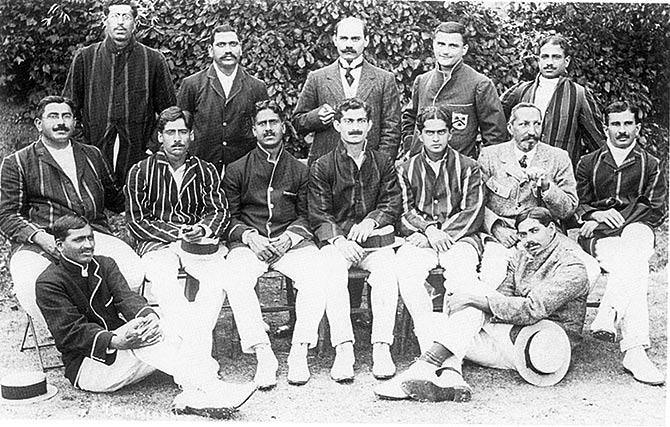
The Indian cricketers at Hove, Sussex. August 1911. Standing (second from left) is Baloo Palwankar.
1926-27 (the match that accorded India test cricket playing status): The opportunity came when the Marylebone Cricket Club (MCC) team visited India in 1926‐27 under the stewardship of test player and English captain Arthur Gilligan. The MCC team was to play local Indian teams and showcase English skills at cricket. The match that made the English sit up and take Indian cricket seriously was one played between the Hindu club and the MCC at Bombay Gymkhana. CK Naidu hit 153 with 11 sixes. This was made against the fearsome pace attack of Maurice Tate, George Geary, and Bob Wyatt. The MCC presented Naidu with a silver bat in acknowledgement of that innings. Cricket historians believe that it was this particular knock that impressed Gilligan, who carried the message to the authorities in England that India was ready to play Test cricket.
A Ringside View of the First CRICKET Test Match
DAY 1
June 25, 1932 was a historic moment for Indian cricket‐ India was to play its first cricket test match against the full strength English team at the Lords cricket ground. The Indian captain Maharaja of Porbander sat out of the match‐ a gesture which needs to be acknowledged, for the Maharaja was not the best cricketer amongst 18 member team, the mantle of captainship he handed to CK Naidu unquestionably the most experienced in the team.
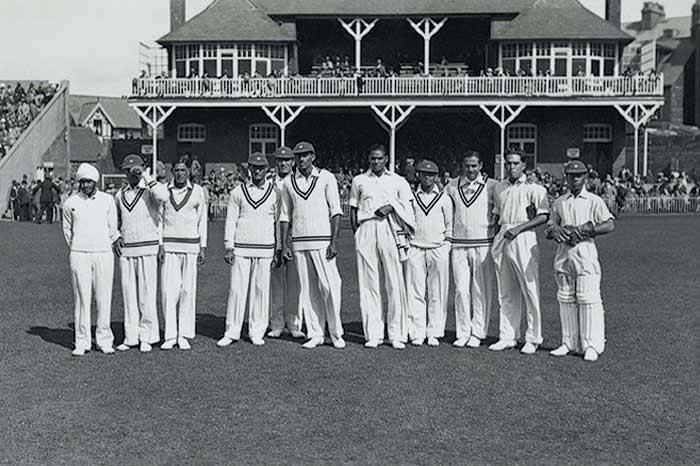
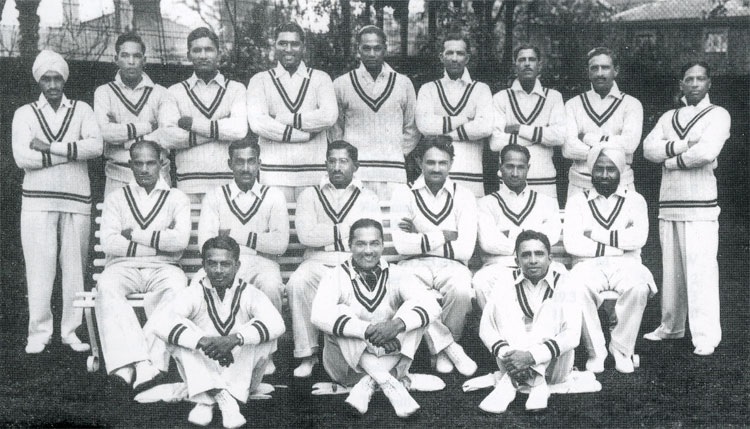
The playing XI at the Lords Cricket Ground
England won the toss and decided to bat. Mohammad Nissar bowled India’s first ball in Test Cricket. Facing him was the world’s best opening batsman of that time, Herbert Sutcliffe. At the non-striker’s end stood Percy Holmes. Both Nissar and his opening bowling partner Amar Singh purchased fiery pace of the wicket. Captain CK Naidu put pressure by placing three slips and two short legs, the reputation of the batsmen notwithstanding. Indians did not seem to be the underdogs.
With the English score at eight runs, Sutcliffe played a vicious in‐swinging yorker from Nissar onto his leg stump. Three runs later, the bowler brought one back at lightning pace to send the off stump of Holmes flying. The famed English opening pair was back in the pavilion with a score reading merely 9/2. The unknown Indian side was no penny pusher.
Coming at number three was the immensely experienced Frank Woolley, later to find a place in ICC Cricket hall of Fame. A misjudgement while taking the second run saw the agile Lal Singh run Woolley out with an accurate throw. Within twenty minutes of start the English were tottering at 19/3.
The English had not bargained for this; the English dressing room went into a huddle. The situation was alarming—the prowess of England as a cricket powerhouse was being questioned. Wally Hammond and English captain Douglas Jardine dug and negotiated the fearsome pace attack with patience and skill. It was not easy at the pitch with Nissar, Amar Singh, Jehangir Khan, and Naidu bowling their hearts out. The two batsmen piled up 82 for the fourth wicket till Amar Singh breached Hammond’s defense and clean-bowled him. The English were still not out of the woods; the score stood at 101/4. And soon to depart was Eddie Paynter, another of the world’s top batsmen in English team ranks, reducing England to 149/5.
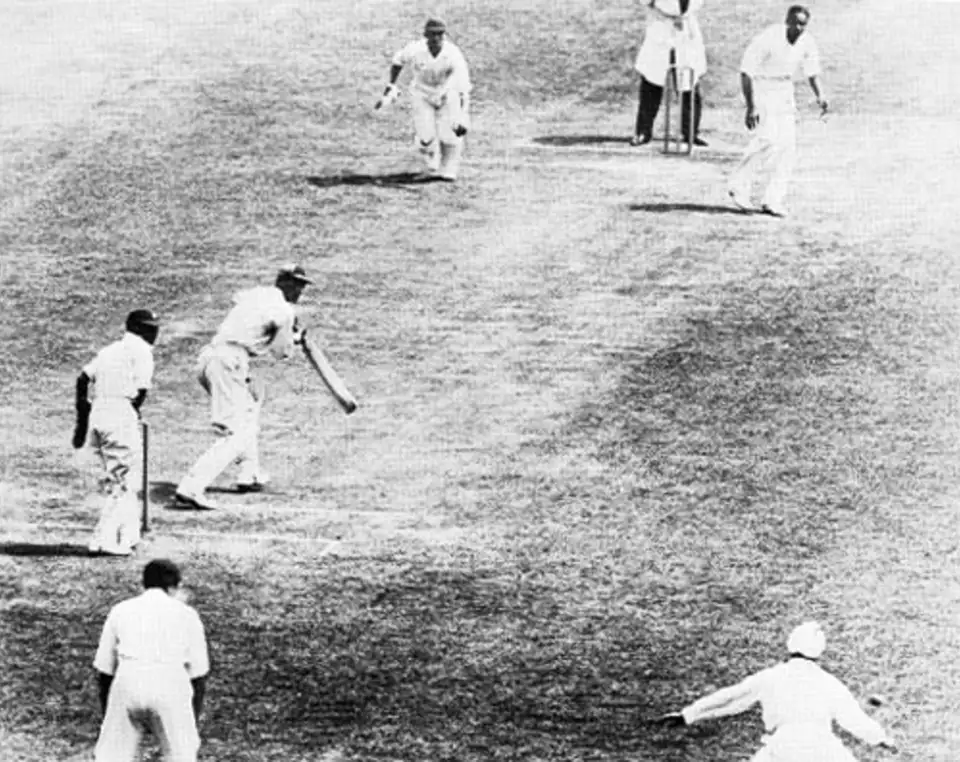
Douglas Jardine facing Amar Singh, Lord’s, 1932
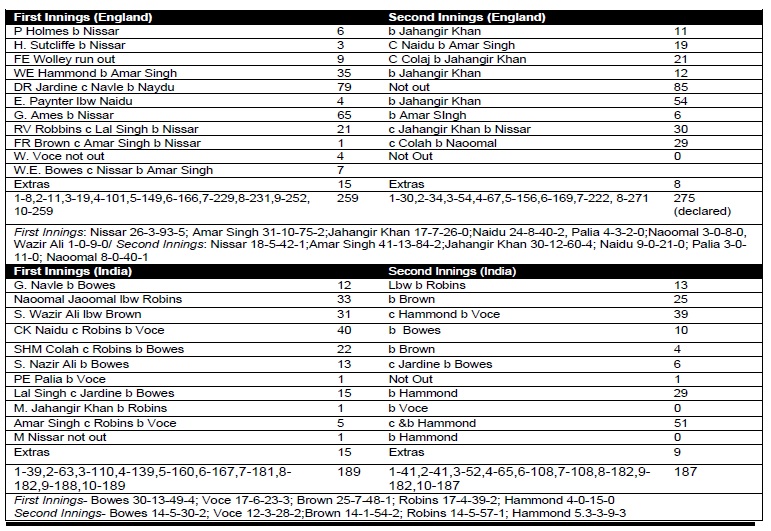
It was then that the Indian concentration faltered; wicket keeper Navle missed a stumping of the next batsman, Les Ames, even before the batsman had scored. This proved costly; Ames went on to make 65 runs. Had the stumping happened, England’s score would have read 149/6 and exposed its tail enders. Not a happy situation at all. England was all out for 259, with captain Jardine the top scorer with 79. Mohammad Nissar bagged 5 wickets.
Indian openers Naoomal Jaoomal and Janardan Navle walked in to start the Indian innings under fading lights on the first day. They negotiated the new ball well, and at the draw of stumps, the Indian innings stood at 30/0. Clearly the first day had gone India’s way; it was India’s Lagaan moment.
DAY 2
The Indian spirited performance continued till lunch on the second day when India was 101/2, with two of its best batsmen, CK Naidu and Wazir Ali at the crease. Post lunch the English fast bowling machine comprising of Voce and Bowes fired and Indian’s lack of batting depth was exposed. The Indian middle order collapsed like a house of cards and Indians were all out for 189 giving English a lead of 70 runs.
The English second innings saw the demolition squad, led by Jehangir Khan and Amar Singh reduce the English score to 67/4. As in the first innings, Jardine got going, and along with Paynter, who scored a crucial half-century, steadied the ship. The English finished Day 2 at 141/4, holding an aggregate lead of 211 runs..
Day 3
On day 3, England, assisted by some hard hits by Robbins and Brown, took the score to 275/8 off 110 overs and declared their innings. Jardine anchored the innings with characteristic grit, carrying his bat to finish not out on 85. M. Jahangir Khan put up a stellar bowling performance, finishing with figures of 4 for 60 in 30 overs, while Amar Singh claimed 2 wickets. Interestingly, Jahangir Khan had a doctorate from Cambridge University, and his son, Majid Khan, went on to captain the Pakistan test side (1972-73). India faced a stiff target of 346 runs to pull off an incredible upset. It was now up to the Indian batsman to take the fight to the opposition camp.
Indian batting could not live up to the challenge. Openers Janardan Navle (13) and Naoomal Jaoomal (25) attempted to blunt the new ball. Syed Wazir Ali played a stubborn and polished knock of 39, combining with captain C.K. Nayudu to cruise through difficult waters. However, once the frontline defense was breached, the lack of deep international experience and the physical toll of a grueling schedule began to tell. Wickets began to tumble against the persistent accuracy of Voce, Bowes, and a surprising spell from Wally Hammond, who devastatingly claimed 3 for 9 in just 5.3 overs.
Only Amar Singh, coming in at 108/7, sparkled for a while, hitting Robins for 19 in an over, including a six—adding 74 in 45 minutes with Lal Singh. His 51 took India to 187, the final margin of loss being a comprehensive 158. It is true that while Indian bowling and fielding were world-class, the Indian batting left much to be desired. The highest wicket-taker for India was Mohammad Nissar, who claimed 6 wickets across the match, becoming the first Indian bowler to take a five-wicket haul in Test cricket (5/93 in the first innings).
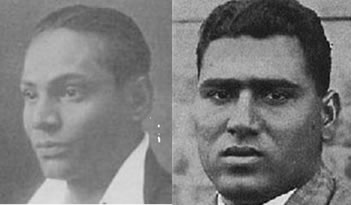
Amar Singh (L) and Mohammad Nissar (R), the two stalwarts of India’s first cricket test match
India Players Who Could Have Made a Difference
Unfortunately for India, two of her best batsmen—Nawab of Pataudi and Duleepsinghji of Jamnagar, both of whom earned place in the English national team—refused to play for the All India Cricket team of 1932. Had these two batsmen been playing, India might well have defeated England in its maiden Test encounter, and that match would have become part of the Indian cricketing lore. Interestingly, during the 1932 tour when the All India Team played its first-class match against the Sussex County, there were two Indian captains on the field—CK Naidu, the All India Team Captain, and Duleepsinghji, the Sussex team captain.
Another player who was missed dearly at Lords was DN Deodhar (afterwhom the Deodhar Trophy is named). In 1932, at the age of 40, he was considered too old for the team. Deodhar was a prolific batsman with a first-class average of 40. On hindsight, the age factor probably got a bit overplayed; Deodhar led Maharashtra to their only two Ranji Trophy triumphs in 1939‐40 and 40‐41, eight years after the first Test at Lords was played.
Praise for the debutant Indian Test Team
“He came off the pitch like the crack of doom.”
— Wally Hammond, legendary England batsman, describing the lethal, buzzing pace of Amar Singh. Hammond also claimed Singh was “as dangerous an opening bowler as I have ever seen.”
“During his opening spell, Nissar was even faster than Harold Larwood.”
— C.K. Nayudu, India’s captain, writing about Mohammad Nissar’s ferocious opening burst (notably comparing him to Larwood, the terrifying architect of England’s infamous 1932 Bodyline series).
“There is no better bowler in the world today than Amar Singh.”
— Sir Len Hutton, legendary England opening batsman, reflecting on the historical prowess of the Indian quick.
“There has never been such a team of contrasts meeting on the common footing of cricket. The 18 players speak eight to ten languages among them; they belong to four or five different castes… six Hindus, five Mohammedans, four Parsees and two Sikhs.”
— The Evening Standard (London newspaper), marveling at how seamlessly the culturally diverse team united to rattle England on the pitch
“Polished, quicksilver work…”
— Neville Cardus, legendary British cricket journalist, praising the sharp movements of Indian wicketkeeper Janardan Navle.
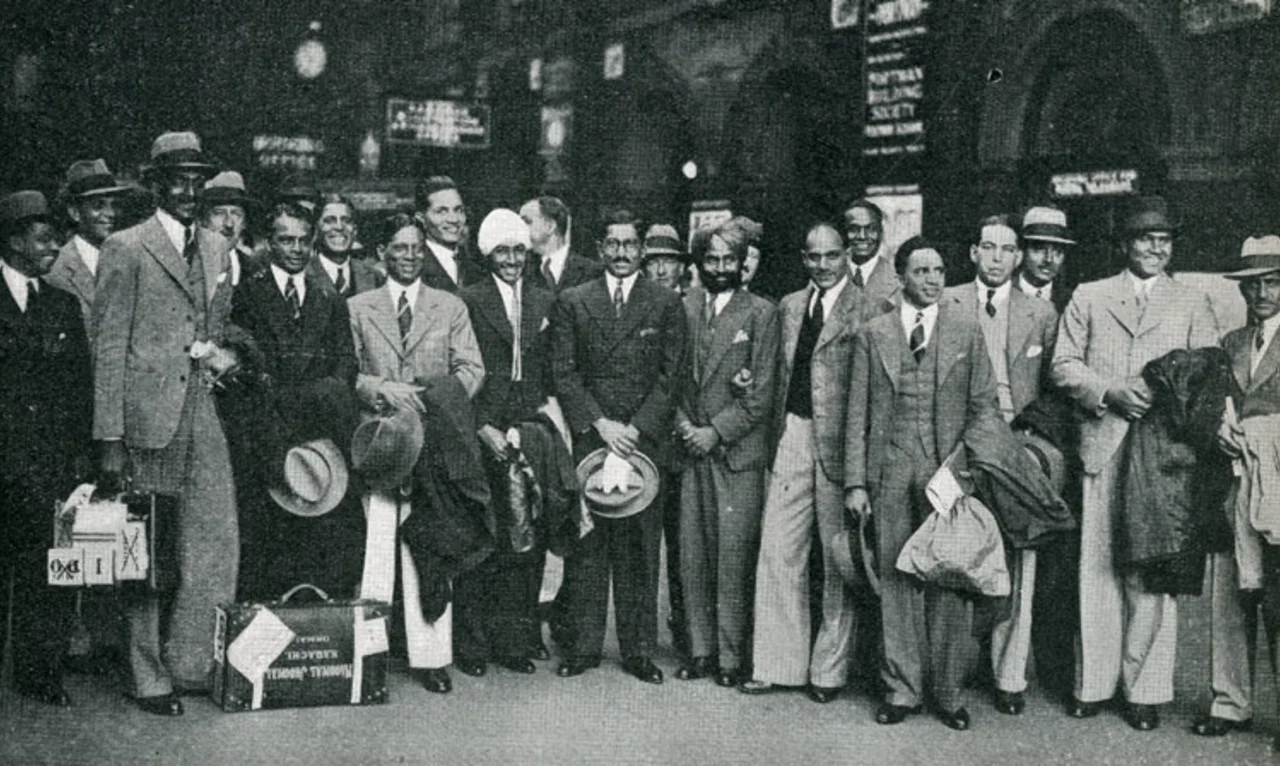
The players of the first Indian test cricket team are seen dressed in sharp period suits, overcoats, and hats, posing with their luggage and travel gear at a London railway station
tHE AVAILABLE VIDEO FOOTAGE of the first Indian test match
The Score Card


The story recreates the imagery of the test match in the mind of the reader. After a long time read such a lively story. Amazing
Thank you for the encouraging words
The story vividly brings the Test match to life in the reader’s imagination. Every moment unfolds so vividly that one can almost feel the excitement of being there on the field. After a long time, I have read such a lively, engaging, and immersive story.
Thankyou so much
Great to know about the gems of the 1st Indian cricket team
Thankyou so much
Great information and attractive story line
Thank You
🏏✨ What a beautiful throwback! Cricket memories like these never fade—they bring back the excitement, friendships, and unforgettable moments. ❤️🏏 Pure nostalgia!
Thank you so much for the encouragement
Reading this kind if sensational story pulls one back to one’s passionate sensation for the genleman’s game. its the story Of the rise of a cricketing
nation thats going to prove itself to be the champion. Great share indeed.